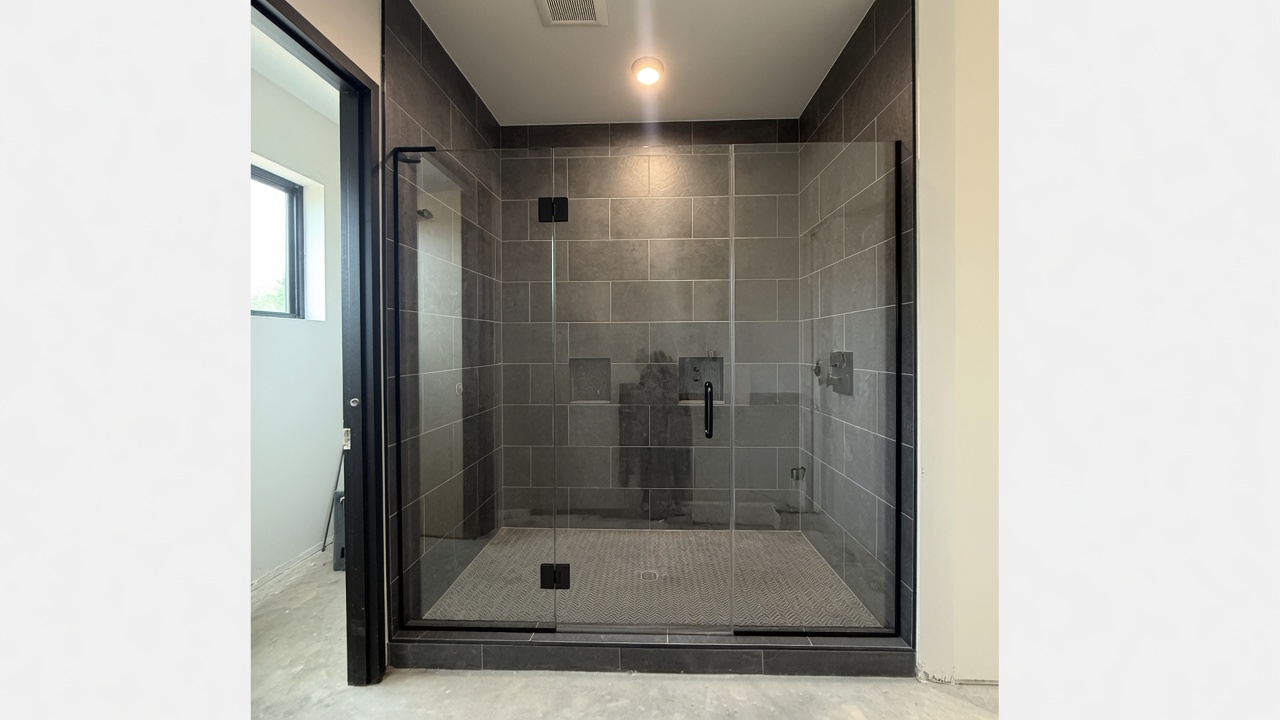
Frameless vs. Semi-Frameless Shower Doors
A straightforward comparison of cost, structure, look, and maintenance — so you can choose the right enclosure for your bathroom and budget.
If you're planning a bathroom upgrade in Raleigh or the Triangle, one of the first decisions you'll face is whether to go frameless or semi-frameless. Both styles use tempered glass and professional hardware, but they differ in appearance, price, installation requirements, and day-to-day upkeep. This guide breaks down what matters most.
Frameless vs. Semi-Frameless Side-by-Side
| Feature | Frameless | Semi-Frameless |
|---|---|---|
| Glass thickness | 3/8" or 1/2" tempered | 1/4" or 5/16" tempered |
| Metal framing | Minimal — only hinges, clips, and a handle | Thin frame around fixed panels or top rail |
| Look & feel | Open, modern, spa-like | Clean and contemporary with subtle structure |
| Typical cost | Higher | Moderate — often 20–40% less |
| Structural tolerance | Requires plumb walls & level curb | More forgiving of minor wall variation |
| Ease of cleaning | Easiest — no tracks or frames | Easy — thin frames need occasional wiping |
| Best for | Master baths, high-end finishes, resale value | Guest baths, tighter budgets, practical updates |
What Is a Frameless Shower Door?
A frameless shower door is built from heavy tempered glass panels — usually 3/8" or 1/2" thick — that stand in place with minimal hardware. There is no metal frame wrapping the glass. Instead, small clips, hinges, and a handle hold everything together.
- Cleanest, most open appearance
- Shows off tile work beautifully
- Easier to clean long-term
- Higher-end resale appeal
What Is a Semi-Frameless Shower Door?
A semi-frameless shower door uses thinner tempered glass — typically 1/4" or 5/16" — with a slim metal frame around the fixed panels, top rail, or door edges. The door itself may swing with little visible hardware.
- More budget-friendly
- Still looks modern and clean
- More forgiving of wall imperfections
- Faster to fabricate and install
Cost Differences
Frameless shower doors cost more for three reasons: thicker glass, heavier hardware, and more precise installation. Semi-frameless systems use less glass and lighter hardware, so they're usually the more economical choice.
Frameless
Thicker glass, solid brass or stainless hinges, and precise templating add cost — but deliver the most premium result.
Semi-Frameless
Thinner glass and aluminum framing reduce material and labor costs without sacrificing a contemporary look.
Exact pricing depends on dimensions, glass type, hardware finish, and layout. We provide itemized quotes before any work begins.
Structural Requirements
Frameless glass relies on the walls and curb being square and stable. Out-of-square openings may need custom shimming or a semi-frameless system. Semi-frameless framing hides small imperfections and provides extra rigidity, making it a practical choice for older homes or remodels where walls aren't perfectly plumb.
Aesthetic Impact
Frameless doors disappear into the room, emphasizing tile, stone, and fixtures. Semi-frameless doors add subtle metal lines that can complement chrome or brushed nickel finishes. Both look modern — frameless leans luxury; semi-frameless leans practical elegance.
Maintenance & Cleaning
Frameless doors win on cleaning because there are no tracks or frames to collect soap scum. Semi-frameless doors have slim frames that need occasional wiping but are still far easier to maintain than old-style fully framed doors.
Frameless
- No metal tracks
- Fewer places for mildew to hide
- Optional protective coating reduces water spots
Semi-Frameless
- Slim frames wipe clean quickly
- Less glass to squeegee
- Coating also available
Which One Should You Choose?
Choose Frameless If…
- You want the most modern, open look
- You're remodeling a master bath
- You want to maximize resale value
- Your walls and curb are plumb and level
- Budget is flexible for a premium finish
Choose Semi-Frameless If…
- You want a clean look at a lower cost
- You're updating a guest bath or rental
- Your walls have minor imperfections
- You need a faster turnaround
- You prefer a little more structural framing
Shower Door Comparison FAQ
- What is the difference between frameless and semi-frameless shower doors?
- Frameless doors use thick tempered glass with minimal metal hardware and no surrounding frame. Semi-frameless doors have a thin metal frame around some edges — usually the fixed panels or top rail — while the door itself may operate with little or no frame.
- Are frameless shower doors more expensive than semi-frameless?
- Yes. Frameless doors typically cost more because they require thicker tempered glass — usually 3/8" or 1/2" — and heavier-duty hardware. Semi-frameless doors use slightly thinner glass and more aluminum framing, which reduces material and labor costs.
- Which is easier to clean: frameless or semi-frameless?
- Frameless doors are generally easier to clean because there are no metal tracks or frames to trap soap scum and mildew. A water-repellent protective coating makes both styles even easier to maintain.
- Do frameless shower doors leak?
- Properly measured and installed frameless shower doors do not leak. Clear vinyl seals and precise gaps prevent most water escape. Installation quality matters more than the style itself.
- Can any bathroom have a frameless shower door?
- Most bathrooms can accommodate a frameless door, but the walls must be plumb and the curb or pan must be level. Out-of-square openings are usually better suited to semi-frameless or framed systems, which tolerate more variation.
Still Deciding? Get a Free Estimate
We measure your space, review your options, and recommend the best shower door style for your bathroom and budget. Serving Raleigh, Cary, Apex, Durham, and the entire Triangle.